
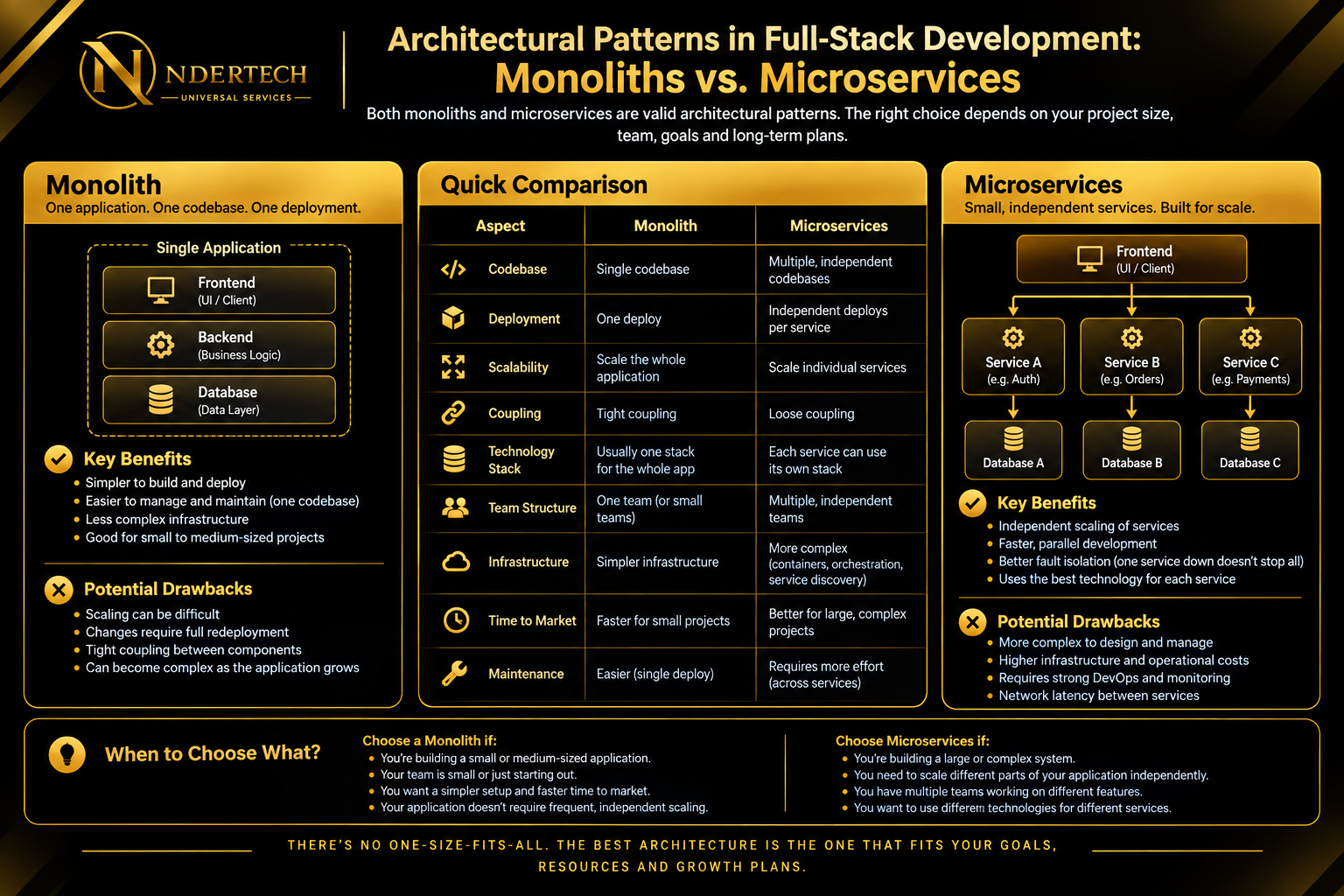
Choosing the correct software architecture is arguably the most critical decision a development team makes at the inception of any major digital project. Whether you are architecting a corporate web platform, a financial cooperative portal, or a multi-tenant SaaS application, the structural foundation dictates how your code scales, how easily it can be maintained, and how efficiently server resources are utilized.
1. Understanding the Modern Monolithic Architecture
A monolithic architecture is built as a single, unified unit. In a typical PHP-based monolithic web application, all business logic, database interaction models, routing rules, and frontend template rendering reside within a single codebase directory structure. Monoliths are often unfairly criticized in modern development circles, but they offer distinct advantages:
- Simplified Deployment: Uploading your directory structure via cPanel or cloning your Git repository deploys the entire application instantly.
- Easier Debugging: Tracing application execution paths, session variables, and database queries occurs within a single unified execution thread.
- Optimal Performance for Small to Medium Scale: Without network latency between distributed services, internal function calls execute with lightning speed.
2. The Microservices Paradigm and Distributed Systems
As applications grow to serve millions of concurrent users with specialized teams working on disparate features, monolithic architectures can become unwieldy. Microservices break an application down into a collection of loosely coupled, independently deployable services communicating via lightweight APIs, often leveraging high-performance languages like Go alongside PHP core engines.
While microservices provide ultimate scalability and fault isolation where the failure of one service does not crash the entire ecosystem, they introduce immense operational complexity. Distributed tracing, network latency, eventual consistency in database transactions, and complex deployment pipelines require advanced DevOps expertise.
3. Making the Right Strategic Choice for Your Enterprise
At NderTech Universal Services, our engineering philosophy prioritizes pragmatism over industry hype. For regional business portals, institutional result management systems, and specialized CBT platforms, a modular, well-structured monolith built with clean MVC patterns provides exceptional performance and maintainability without unnecessary architectural overhead.
Conclusion
There is no silver bullet in software architecture. Evaluating your project requirements, team size, deployment infrastructure, and user scale ensures you select the optimal pattern for long-term success.
Written by Engr. Avela Nder Marcel